
Automotive & Transportation
Automotive tube parts are defined by more than a bend
The right equipment discussion begins with thecomponent geometry and production context, notwith a generic machine category.
O1 / Part Geometry
Complex tube paths
Multiple bend planes, compact routing areasand formed interfaces can shape the processrequirements for a finished automotivecomponent.
O2 / Material Context
Material and tube condition
The selected tube material, outside diameter,wall thickness and incoming condition are alluseful inputs before evaluating a potentialprocess path.
O3 /Production Flow
Connected operations
Cutting, bending, end forming, handling andinspection may need to be consideredtogether when planning a recurring component workflow.
Explore tube-processing needs by vehicle component system
Automotive and transportation applications can involve very different tube geometriesand connected operations. Select a component area to see the typical processquestions behind it.
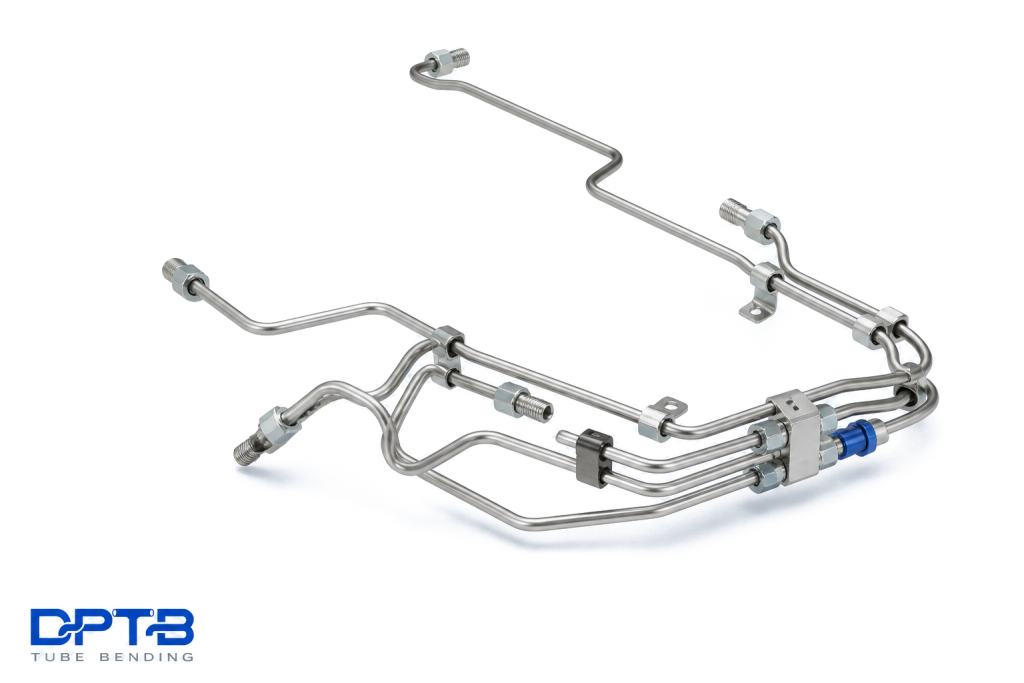
Routing tubes for braking,fuel and fluid-transfer systems
Routed tube assemblies may include multiple bends, compact layouts and specific end conditions. A productive discussion startsby reviewing the tube drawing, material information and the sequence of bending and end-forming operations.
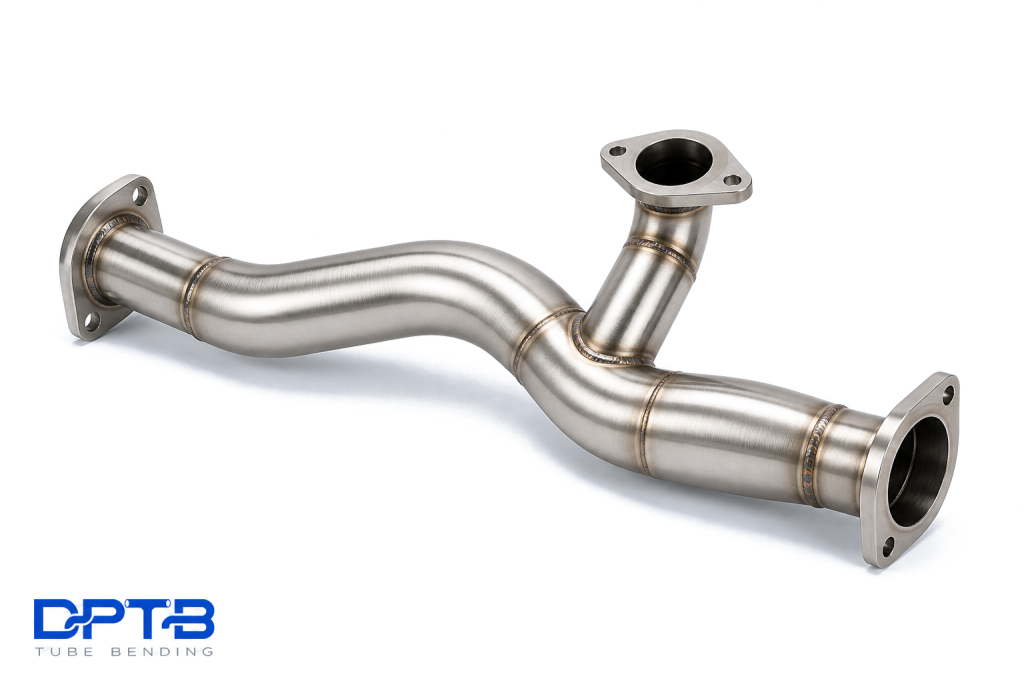
Tube components with complex geometry andstructural context
Exhaust sections, chassis-related parts and torsion-stylecomponents can bring together bend geometry, tube preparationand downstream joining requirements. The production route shouldbe considered from incoming material through to the finished part.
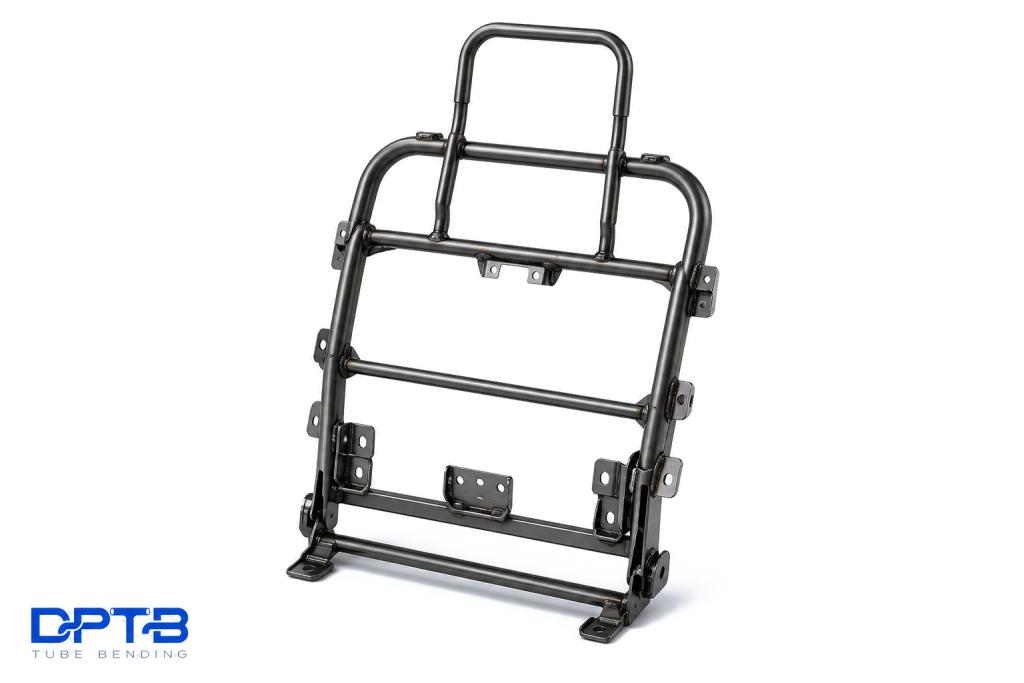
Repeatable frame geometries for seating andinterior assemblies
Seat structures, headrest frames and related interior componentsoften centre on repeated part shapes and production handling. Thekey inputs include tube dimensions, bend geometry, required outputpattern and associated operations.
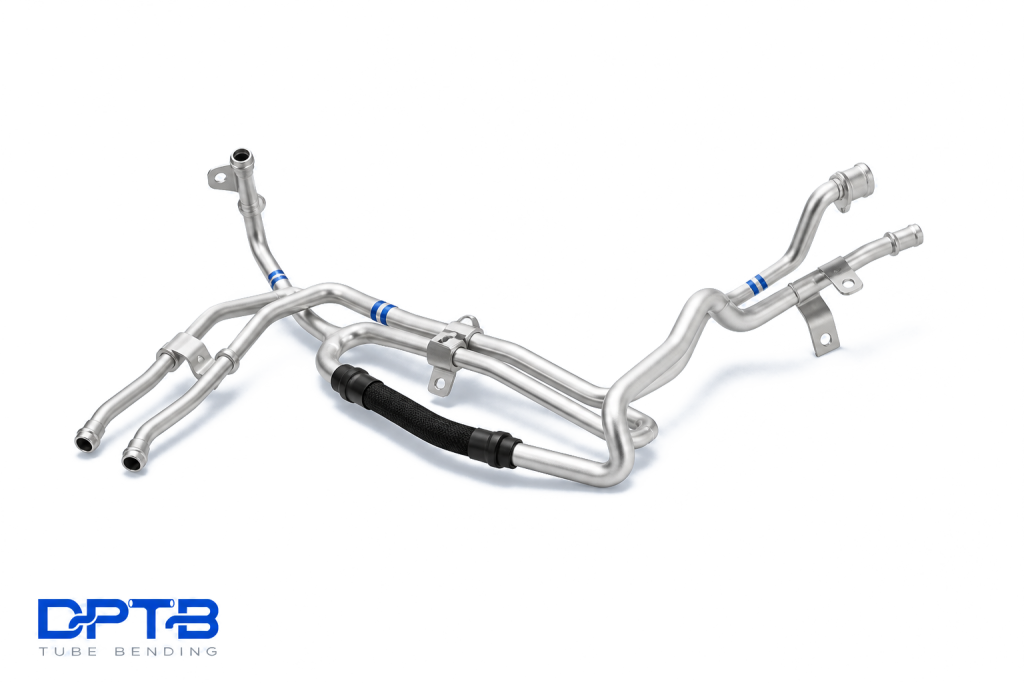
Tube paths where routing and end conditions work together
Automotive thermal-management and cooling-related tube partscan combine controlled routing with defined end interfaces.Reviewing the complete part geometry helps determine whetherbending, cutting and end-forming requirements should be planned together.
Tube workflows for buses,trailers and transport equipment
Transport structures can involve varied tube sizes, repeatablebends and production handling considerations. The componentdrawing and anticipated workflow are useful starting points foridentifying relevant bending and automation questions.
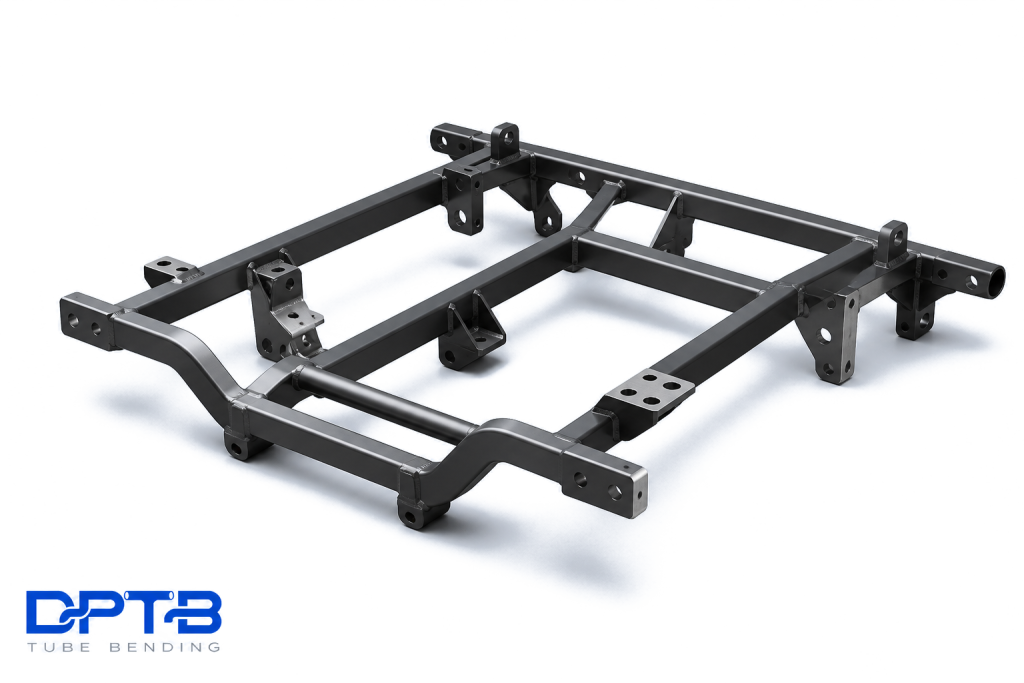
Plan the component workflow around connected processing stages
Review bending, preparation and productionintegration as related stages within the completecomponent workflow.
01
CORE BENDING STAGE
Tube bending machines
02
PREPARATION AND FINISHING
Tube processing machines
03
PRODUCTION INTEGRATION
Tube bending automation
Review loading, transfer and handling across the process path when recurringproduction creates potential automation discussion points.
RELEVANT SERIES
Automotive & Transportation FAQ
Which part information is most useful for an initial discussion?
A part drawing is the best starting point. Where available, include the tube material, outside diameter, wallthickness, bend geometry, end conditions and any critical interfaces or assembly considerations.
Why should bending, cutting and end forming be considered together?
A finished tube component may require multiple connected operations. Reviewing the overall process path canhelp clarify whether the tube should be cut before bending, whether formed ends are required and where handling steps may influence production planning.
How do recurring part quantities affect the equipment discussion?
The intended batch pattern and part repetition are useful planning inputs. They can influence how amanufacturer evaluates handling, tooling changes, process sequence and possible automation requirementsaround the tube-processing workflow.
How do recurring part quantities affect the equipment discussion?
Yes. A component may involve a tube bending stage as well as cutting or tube-end forming. Where material flowis also a consideration, the discussion may extend to tube bending automation and handling requirements.
Which DPTB series should be considered for an automotive application?
The relevant series depends on confirmed application requirements. DPTB APEX, VERSA, TITAN, FLEX andTWIN are tube-bending series, while CUT and FORM address wider tube -processing needs and FLoW is the automation category.
Send us a Message
Contact Information
Address
Maanshan, Anhui, China
TEL
+86 0555-8327689
Phone
+86 0555-8327689